Plan bottle checkweighers around the smallest meaningful weight difference, normal product and tare variation, pack transfer, line speed, reject confirmation and traceable test evidence.
Speak directly with Oxford Vision Systems about dynamic weighing of filled bottles.
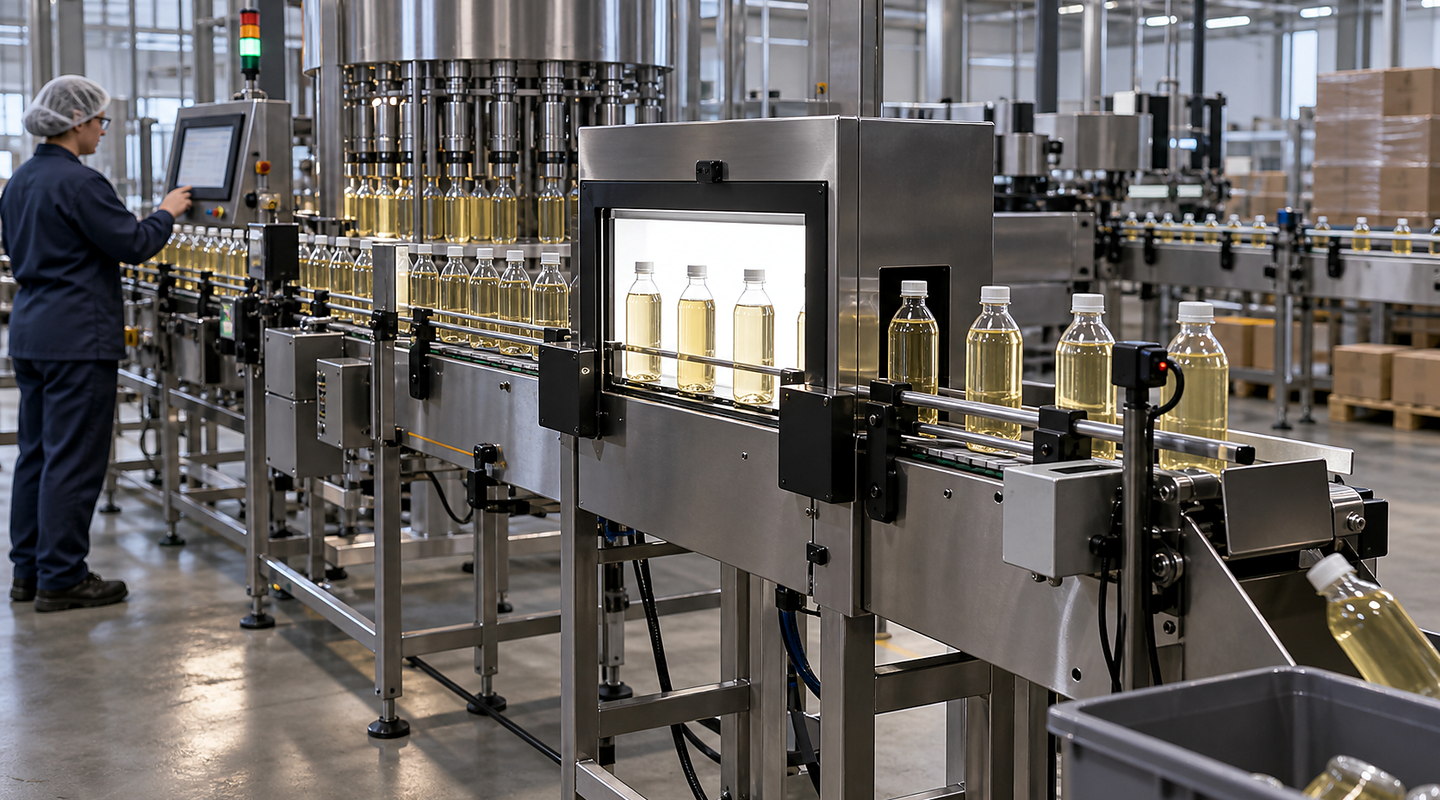
Illustrative bottling-line scene.
Quick answer
What should we specify for checkweighing our bottles at line speed?
Provide filled bottles across the weight range, their dimensions and the required product spacing. Specify the decision limits and the action for an out-of-range bottle. Trial the transfer onto and off the weighing conveyor, including unstable bottles, consecutive rejects and the normal variation in production conditions.
Select a bottle checkweigher around the fault you need to find
The useful comparison is the weight of an acceptable filled bottle against the weight of a real fault, measured through the production transfer.
Decision 1
Separate fill weight from packaging weight
Record empty-bottle, cap and label variation alongside the filled weight. A heavier bottle can mask a low fill, so a gross-weight decision needs evidence from the complete pack rather than nominal product weight alone.
Decision 2
Define the smallest meaningful fault
List underfill, overfill and missing-component cases separately. If the weight distributions overlap, weight alone may not distinguish the fault; identify any additional inspection needed before agreeing an acceptance window.
Decision 3
Keep tall bottles stable
Trial the narrowest base, tallest bottle and least stable fill condition. Assess entry and exit transfers, guides and bottle movement during the weighing interval, including the transition after an upstream stop.
Decision 4
Measure spacing at the weigh conveyor
Provide minimum gaps as well as average bottles per minute. Touching or irregularly arriving bottles may require handling changes before a reliable individual weight decision can be made.
Decision 5
Prove removal of the correct bottle
Test isolated and consecutive failures with good bottles immediately before and after them. Include the reject destination and confirmation signal so the result remains linked to the bottle actually removed.
Decision 6
Control format and limit changes
Record the recipe, bottle format, decision limits and challenge pack identity. Agree who may change these settings and what check is required when a different bottle, closure or fill target is introduced.
Applications
Two useful starting points for bottle checkweighers
The right choice changes with filled bottles, closures and bottle-to-bottle tare variation, smallest meaningful weight difference and acceptance window, your line layout and required results.
What should a bottle checkweigher trial report show?
01
Test through the production range
Use normal production bottles and known faults at the intended transfer conditions. Record format, speed, spacing, weight result and reject outcome together, so an acceptable static reading is not mistaken for proven in-line performance.
02
Investigate ambiguous results
Separate unstable handling, normal tare spread and actual fill variation before changing limits. Retain examples near each decision boundary and state which faults remain outside the demonstrated capability.
03
Agree the routine production response
Set out the checks after a format change, a failed challenge or an unexplained rise in rejects. The trial report should identify the responsible action, affected stock and route back to production.
A checkweigher can only detect a fault that creates a meaningful weight difference.
Normal product and packaging variation must be understood before setting an acceptance window.
A reject signal is not proof that the failed pack was physically removed and confirmed.
Your final solution for dynamic weighing of filled bottles must reflect the law, current standards and site-specific risks that apply to your installation.