In brief

The right solution for bottle checkweighers is the simplest system that reliably handles your stated duty, line connections and expected exceptions.

Plan bottle checkweighers around the smallest meaningful weight difference, normal product and tare variation, pack transfer, line speed, reject confirmation and traceable test evidence.

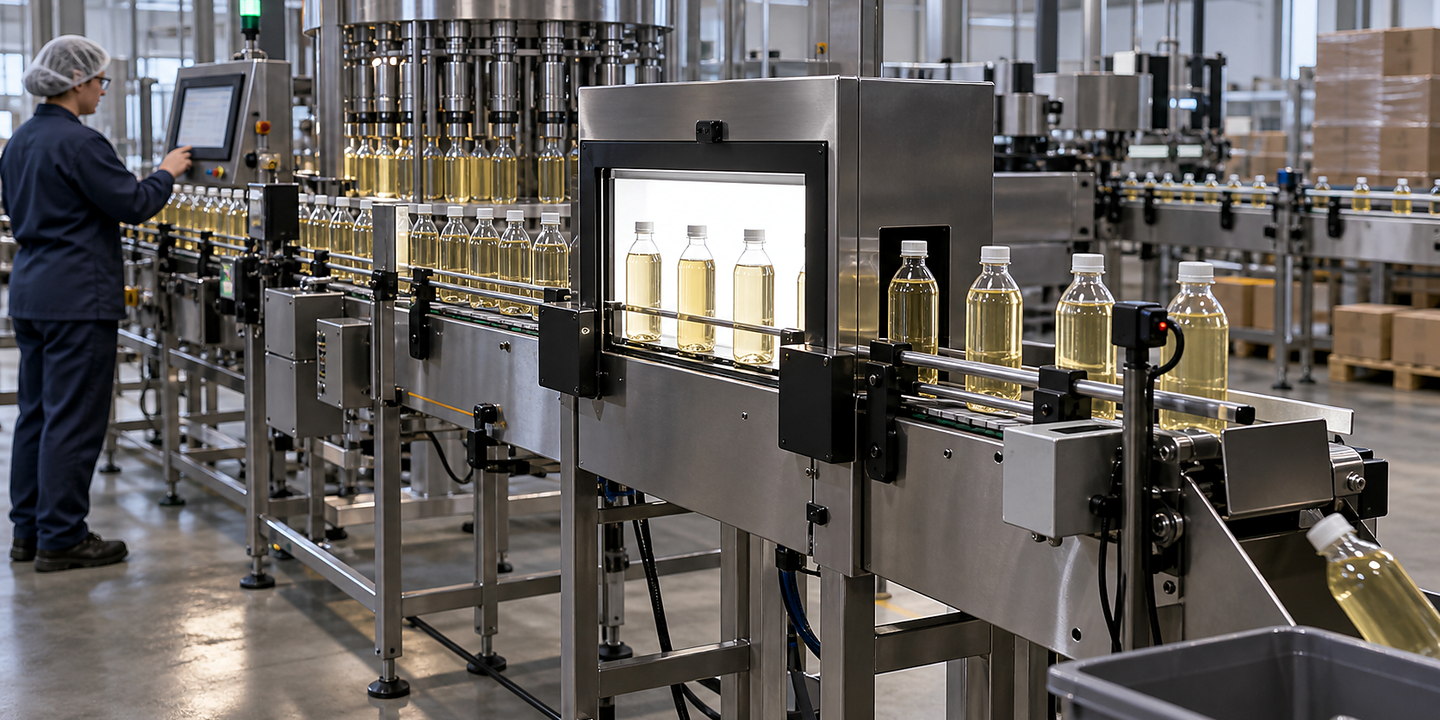
On the production floor

See how the complete system fits your production line — Bottle Checkweighers

Plan bottle checkweighers around the smallest meaningful weight difference, normal product and tare variation, pack transfer, line speed, reject confirmation and traceable test evidence. When you compare solutions, check how each option handles filled bottles, closures and bottle-to-bottle tare variation, smallest meaningful weight difference and acceptance window and your surrounding line.

Discuss your application
How we can help

Bottle Checkweighers support from first review to production use

Understand your requirement

Review filled bottles, closures and bottle-to-bottle tare variation, smallest meaningful weight difference and acceptance window, and pack dimensions, stability and conveyor presentation using your samples, drawings and production observations.

Compare suitable approaches

Run focused trials for bottle checkweighers so you can see why an option is recommended or ruled out.

Fit the complete line

Resolve line speed, spacing, vibration and transfer conditions, reject device, removal confirmation and reject-bin state, controls, safety, operator access and maintenance before site work.

Prove and support the result

Check test packs, challenge method, records and production response in normal, difficult and fault conditions, then agree training and support for your team.

Typical support: representative pack trials, dynamic weighing equipment, conveyor and reject integration, challenge testing and handover.

Compare your options

Compare bottle checkweighers with simpler routes

ApproachOften suitable whenWatch for
Bottle CheckweighersEvery pack needs an in-line weight decision and controlled rejection at production rate.Prove discrimination against normal product and tare variation at real transfer conditions.
Static or Sample Weighing where Every Pack Need Not Be Checked in LineSampling is acceptable and the process can be controlled without weighing every pack.Define sampling frequency, response limits, records and the risk between samples.
Upstream Process Control where the Fault Is Better Prevented or Measured At SourceThe underlying fill or assembly process can prevent or measure the fault more directly.Confirm how upstream control and any final verification divide responsibility.
What to send us

Help us give you useful guidance