Current condition
Identify each good and faulty challenge bottle, its format and reference weight or fault condition. Record the active recipe and limits, line speed, spacing and production state.
Agree bottle checkweigher challenge packs, weight limits, line conditions and physical reject records before acceptance testing.
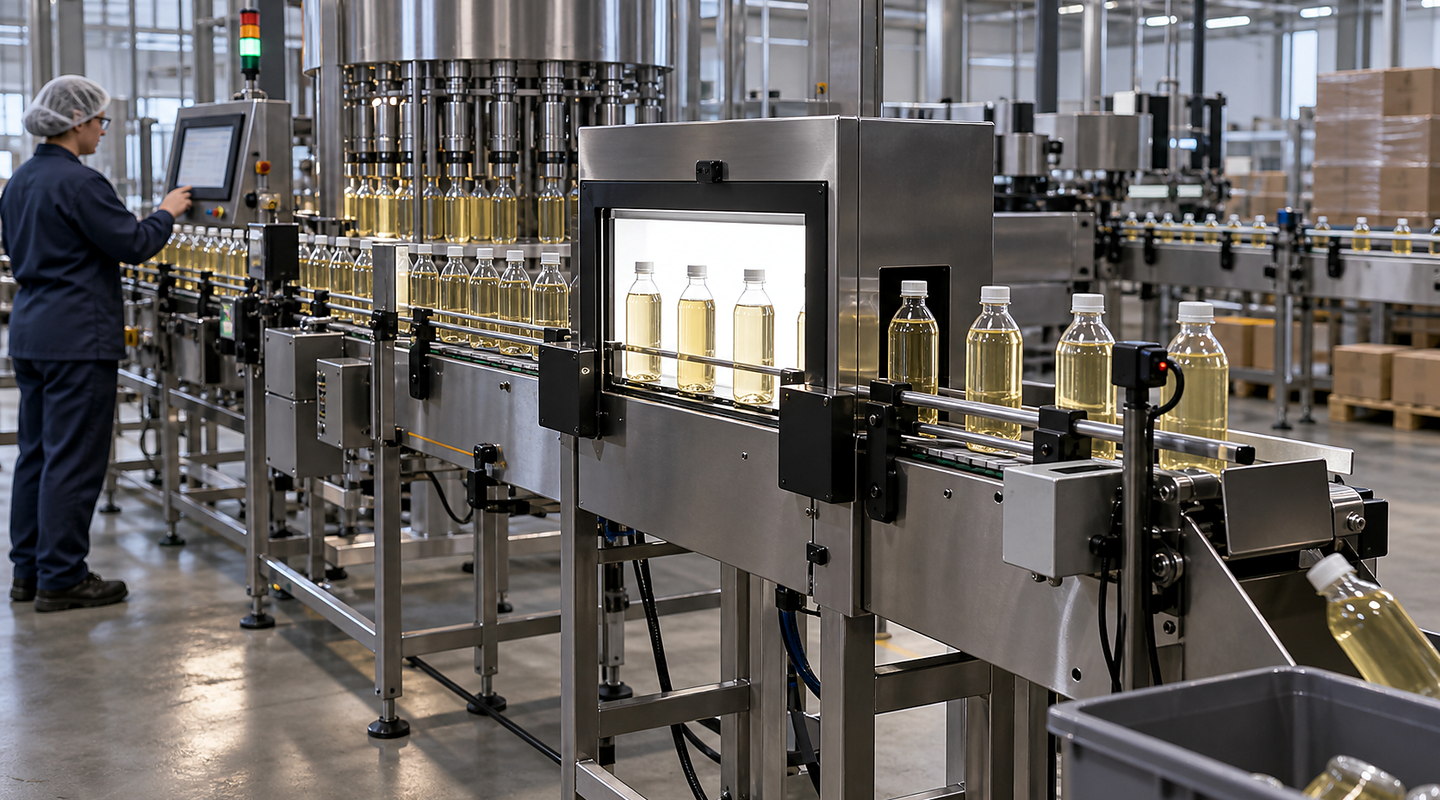
Illustrative bottling-line scene.
Agree identified good and faulty bottle samples, decision limits and the actual line conditions before the trial. For each challenge, retain the weight decision and evidence that the correct bottle was removed; record the responsible response when a challenge or reject check fails.
Include normal tare variation, bottles near the decision boundaries, liquid movement and difficult transfers. Use the acceptance-window guidance to identify which weight faults can be separated from acceptable bottles.
Plan bottle checkweighers around the smallest meaningful weight difference, normal product and tare variation, pack transfer, line speed, reject confirmation and traceable test evidence. Agree the samples, repetitions, pass conditions and production response with the responsible team before testing. Keep the weighing decision separate from the physical reject check.
Discuss your application

Identify each good and faulty challenge bottle, its format and reference weight or fault condition. Record the active recipe and limits, line speed, spacing and production state.
Include normal product and tare spread, boundary examples, unstable formats and liquid movement. Agree representative operating conditions and repetitions rather than relying on a single successful pass.
Connect each weight decision to the physical reject outcome, removal confirmation and destination state. Record failed checks, the responsible action and the agreed route back to production.
Retain sample identities and the relevant product, bottle, cap and label variation. Compare good and faulty weights using the tare-variation study; a gross-weight decision cannot separate faults whose weights overlap normal bottles.
Include known acceptable and faulty bottles near the agreed limits. Record the reference condition, active limits, observed weight and decision without treating one nominal weight as the complete production range.
Record format, speed, minimum gaps and entry and exit transfer behaviour. Include liquid movement and unstable bottles; use the in-line bottle application guidance to prepare representative trials.
Run isolated and consecutive faulty bottles with good bottles immediately before and after them. Keep each weight result connected to its bottle so the test shows whether the intended bottle was removed.
Record the physical removal result as well as the reject signal. Include the agreed response to a failed confirmation or unavailable reject destination; the trial must show how affected bottles and production are handled.
Retain sample identity, recipe, limits, line conditions, weight decision and reject outcome together. Agree who acts after a failed challenge or unexplained rise in rejects, and which checks repeat after a format or limit change.