Bottle Checkweighers: How the Process Works
Plan bottle checkweighing from representative packs and line trials to conveyor integration, reject confirmation and recorded weight challenges.
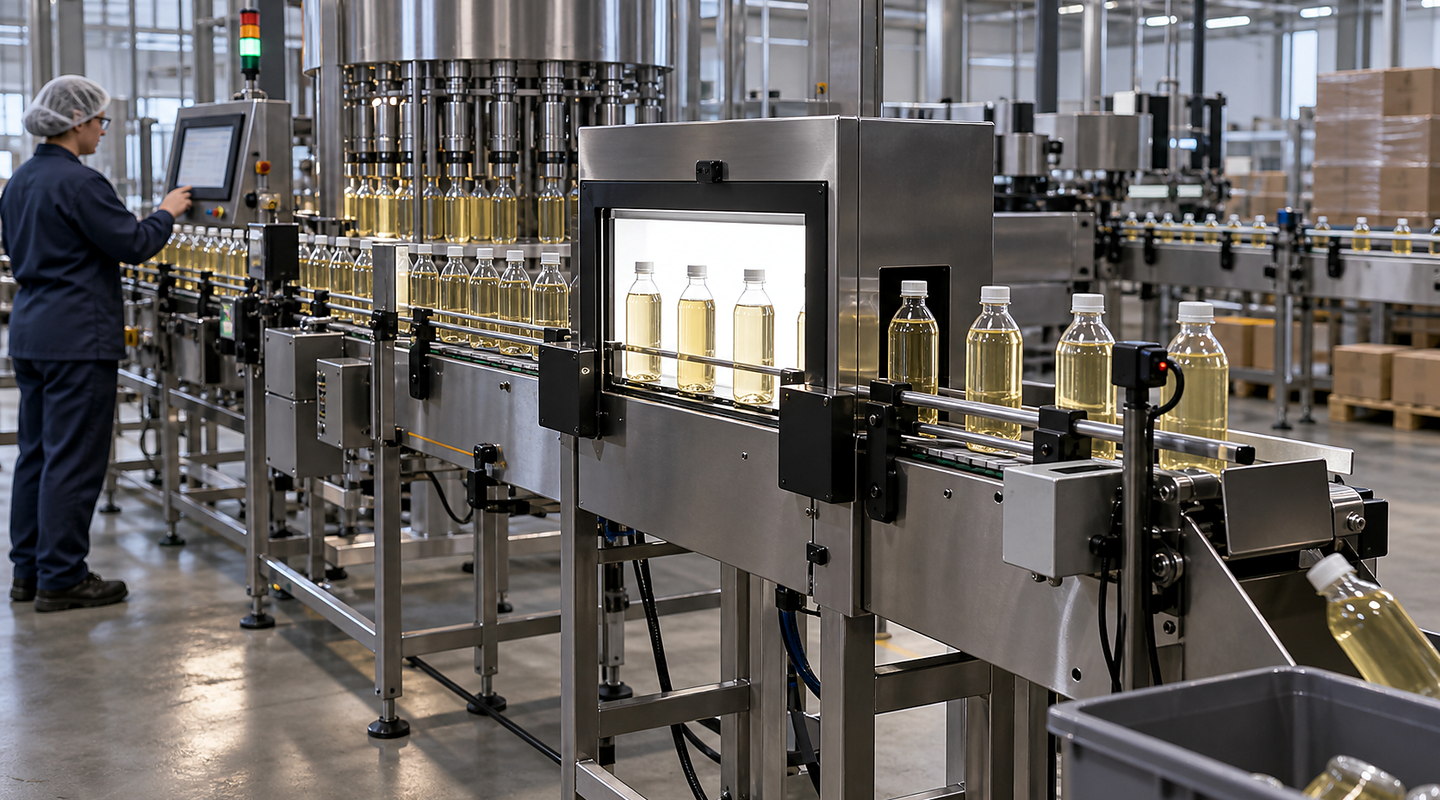
Illustrative bottling-line scene.
A bottle checkweigher measures the moving filled bottle, compares its gross weight with agreed limits and triggers rejection when the result is outside them. First establish how product and packaging variation affect that decision, then trial stable transfers and confirm that the correct failed bottle is physically removed.
Compare acceptable bottles with known weight faults using the product and tare variation guide. Record format, speed, spacing, weight decision and actual reject outcome together; a control signal alone does not prove removal.
Understand the complete route from input to accepted output — Bottle Checkweighers
Plan bottle checkweighers around the smallest meaningful weight difference, normal product and tare variation, pack transfer, line speed, reject confirmation and traceable test evidence. Follow the filled bottle through infeed, weighing, discharge and any reject route. Include short stops, cleaning and format changes in the trial.
Discuss your application

Four clear stages for bottle checkweighers
Keep the sample identity, weight decision, transfer conditions and physical reject result connected through all four stages.
- 01
Measure Normal Product and Packaging Variation
Measure representative filled bottles and packaging components, including supplier and format variation. Compare good and faulty weight distributions before agreeing the smallest weight difference and acceptance window.
- 02
Trial the Real Pack Range At Intended Line Conditions
Trial the intended bottle formats at actual speed and minimum spacing. Record entry and exit transfer behaviour, liquid movement, stability and the weight result together.
- 03
Integrate Transfers, Controls, Rejection and Confirmation
Agree conveyor interfaces, controls and reject destination using the line-integration guidance. Check isolated and consecutive failures with good bottles before and after them, linking each decision to the bottle removed.
- 04
Challenge Known Weight Faults and Retain Agreed Test Results
Use identified good and faulty challenge bottles, including examples near the limits. Record removal confirmation, reject-bin state and the agreed production response; retain the challenge-test and reject records after format changes and failed checks.
Decisions and results stay connected
| Stage | What happens | What you can review |
|---|---|---|
| Measure Normal Product and Packaging Variation | Compare acceptable filled bottles with known faults against normal product and packaging variation. | Bottle and fault identities, measured weight distributions, proposed limits and unresolved overlap. |
| Trial the Real Pack Range At Intended Line Conditions | Run the intended formats through the weighing conveyor under representative speed, spacing and transfer conditions. | Format, speed, minimum gaps, liquid movement, stability and weight results recorded together. |
| Integrate Transfers, Controls, Rejection and Confirmation | Connect infeed, discharge and control interfaces, then prove the reject route with isolated and consecutive failed bottles. | The layout and interface record, bottle-to-decision tracking, removal confirmation and reject-destination response. |
| Challenge Known Weight Faults and Retain Agreed Test Results | Repeat the agreed good and faulty bottle challenges, including boundary examples and a format change. | Challenge identity, settings, weight decision, physical reject outcome, responsible action and return-to-production record. |
Keep connected responsibilities clear
Your final bottle checkweighers scope must also account for reject device, removal confirmation and reject-bin state, test packs, challenge method, records and production response, current regulations and the conditions at your site.
- A checkweigher can only detect a fault that creates a meaningful weight difference.
- Normal product and packaging variation must be understood before setting an acceptance window.
- A reject signal is not proof that the failed pack was physically removed and confirmed.