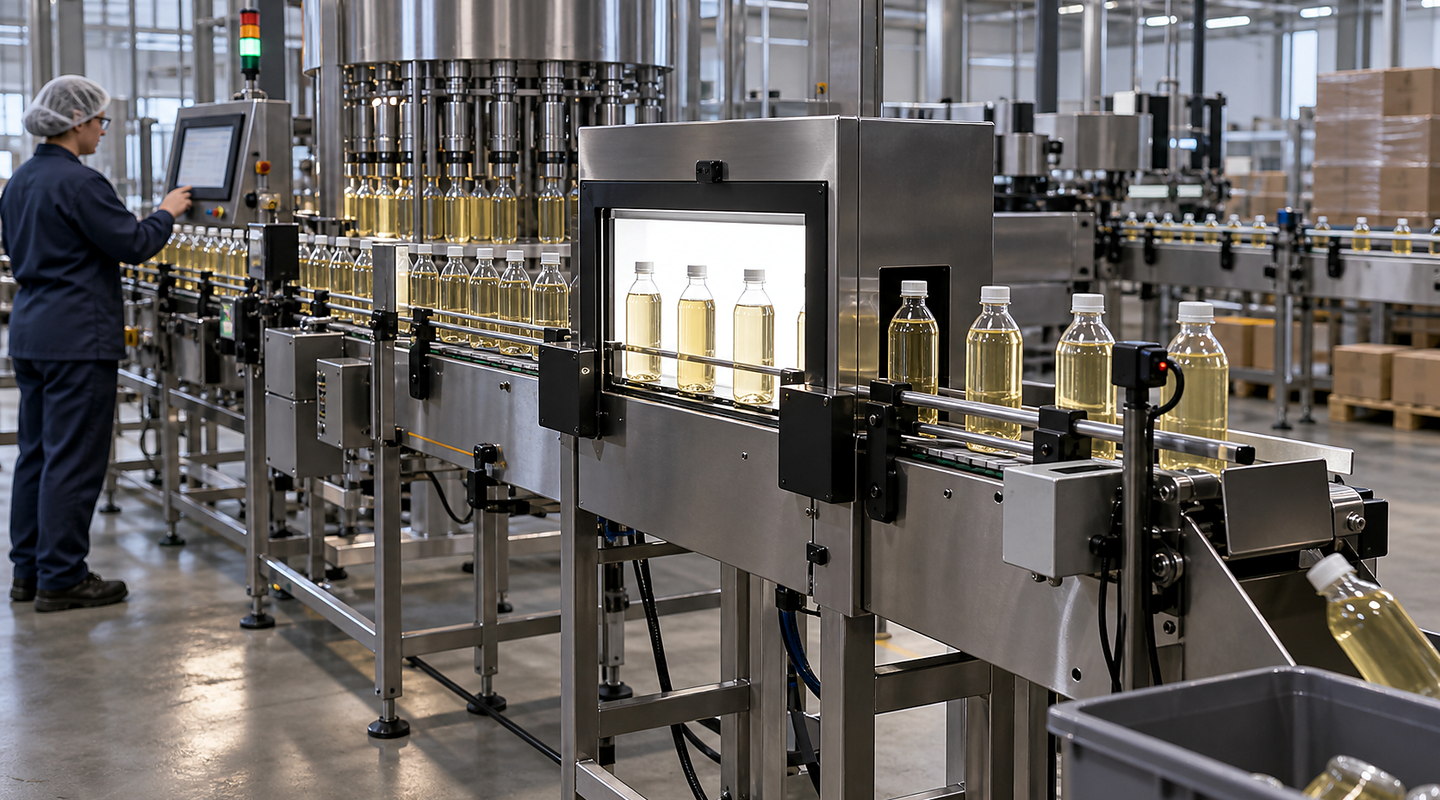
Bottle Checkweighers Selection Guide
Choose bottle checkweighers by comparing your parts, process, rate, access, data needs and required results.
Choose bottle checkweighers by how well each option handles your real variation, line connections, safe access, maintenance and required results—not headline speed alone.
For in-line inspection using dynamic weighing of filled bottles, a short trial that reproduces the difficult condition is often more useful than a long list of nominal specifications.
Compare options in the conditions where they must work — Bottle Checkweighers
Plan bottle checkweighers around representative good, bad and marginal samples, line presentation, lighting, reject handling and challenge criteria. Discuss an optical feasibility trial with Oxford Vision Systems. A useful shortlist should show how every option copes with visible defect or measurement definition for dynamic weighing of filled bottles and recipe, reject and line-control interfaces.
Discuss your application
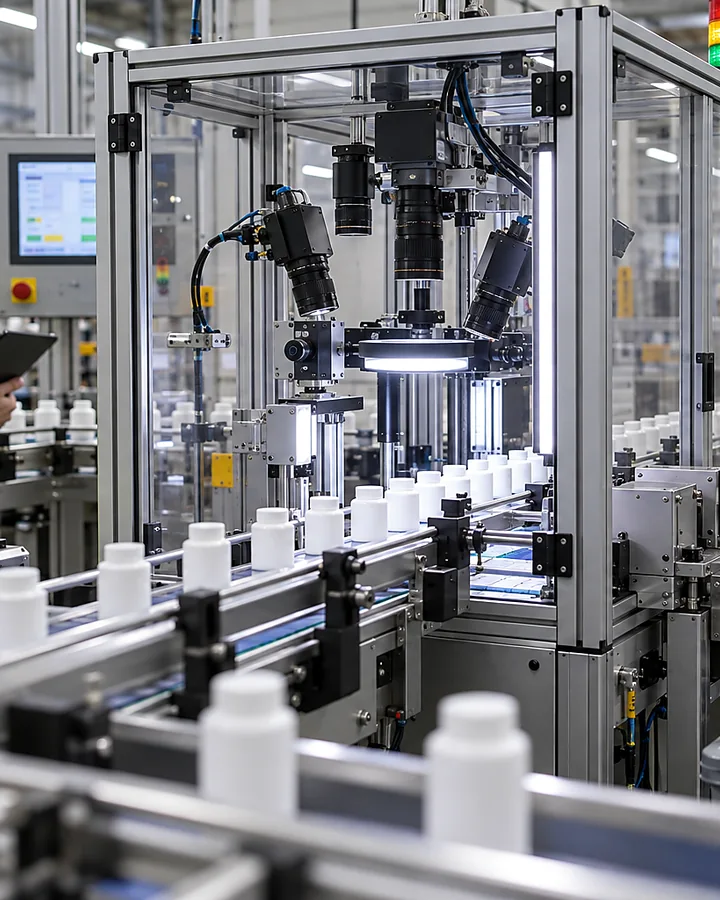
Ask every supplier the same questions
| Decision | What to ask | What to check |
|---|---|---|
| Visible Defect or Measurement Definition for Dynamic Weighing of Filled Bottles | What normal range, extreme and rate of change applies to visible defect or measurement definition for dynamic weighing of filled bottles? | Representative samples and a controlled trial. |
| Good, Bad and Marginal Sample Range | What normal range, extreme and rate of change applies to good, bad and marginal sample range? | Representative samples and a controlled trial. |
| Part Presentation and Production Speed | What normal range, extreme and rate of change applies to part presentation and production speed? | Drawings, observation and interface measurements. |
| Optics, Lighting and Environmental Conditions | What normal range, extreme and rate of change applies to optics, lighting and environmental conditions? | Drawings, observation and interface measurements. |
| Recipe, Reject and Line-Control Interfaces | What normal range, extreme and rate of change applies to recipe, reject and line-control interfaces? | Agreed operating and acceptance records. |
| False-Accept, False-Reject and Challenge Criteria | What normal range, extreme and rate of change applies to false-accept, false-reject and challenge criteria? | Agreed operating and acceptance records. |
Include simpler approaches to dynamic weighing of filled bottles in your shortlist
| Approach | Often suitable when | Watch for |
|---|---|---|
| Bottle Checkweighers | You need a dedicated solution for a clearly defined duty, product or part range and line interface. | Detectability depends on pack stability, line conditions and the difference between acceptable and faulty weights. |
| Purpose-Built Sensors for Simple Presence or Position Checks | Your volumes, product mix or operator judgement make a simpler route more practical. | Check ergonomics, consistency and safe access before choosing the lower-complexity option. |
| Offline Metrology or Destructive Tests where the Property Is Not Visible Inline | Your surrounding process is stable enough for a broader automated solution to add value. | Allow for line connections, fault recovery and maintenance as well as the headline equipment. |
Pause before choosing when…
- Only perfect or hand-selected examples of in-line inspection using dynamic weighing of filled bottles are available.
- No one has defined how false-accept, false-reject and challenge criteria will be evaluated.
- The normal range for visible defect or measurement definition for dynamic weighing of filled bottles is described only as “usually fine” but has not been bounded.
- Your operator, cleaning, maintenance or recovery access has not been considered.
- Quoted performance depends on another machine or data source that is not included.