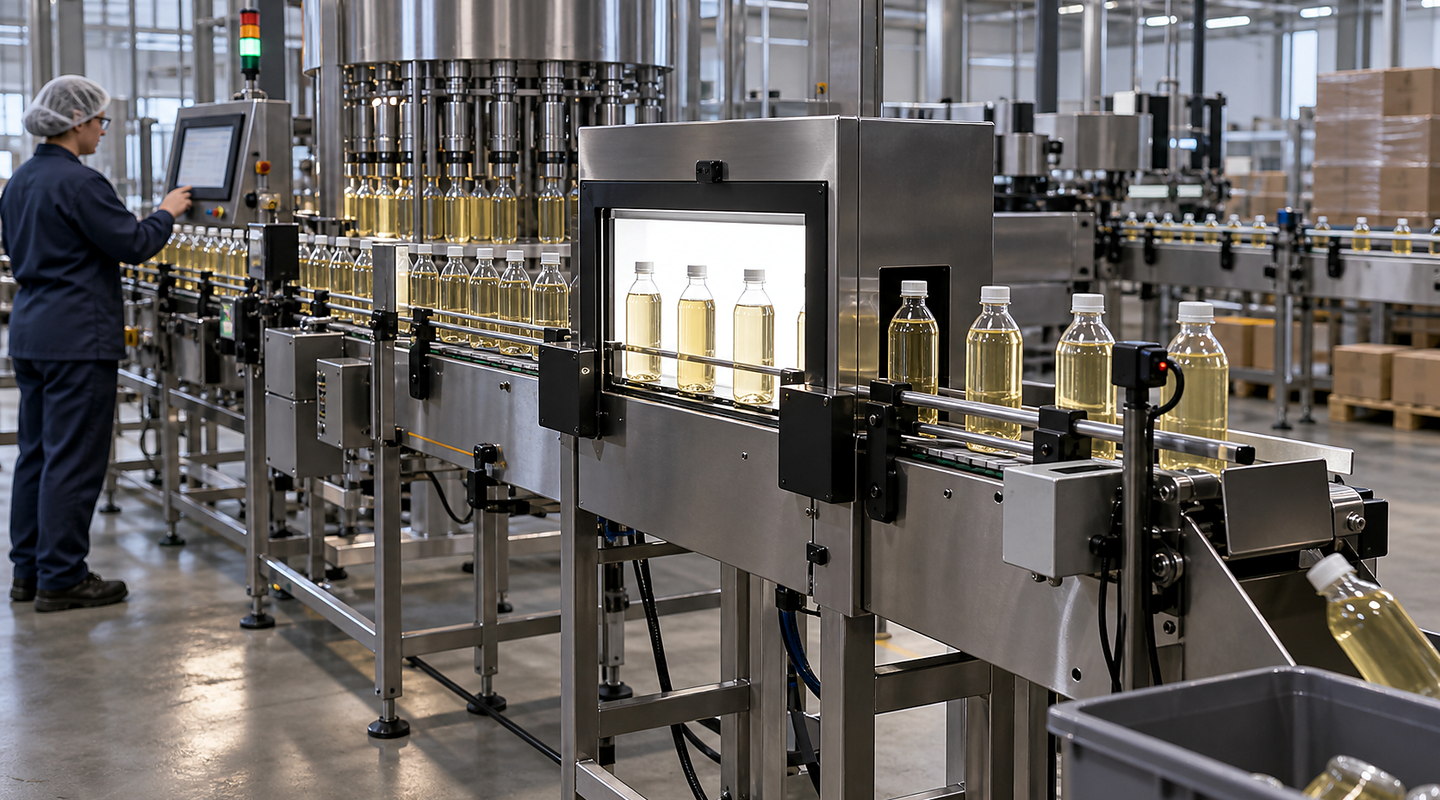
In brief

For bottle-format changes and retrofit checkweighing, start with representative packs, measured product and tare variation, line conditions and known test packs and your full operating sequence, then check the smallest meaningful weight difference, unstable transfers, rate changes and failed-reject scenarios before committing to a final layout.

Plan bottle checkweighers around the smallest meaningful weight difference, normal product and tare variation, pack transfer, line speed, reject confirmation and traceable test evidence.

On the production floor

Plan for the conditions your team handles every day — Bottle Checkweighers

Plan bottle checkweighers around the smallest meaningful weight difference, normal product and tare variation, pack transfer, line speed, reject confirmation and traceable test evidence. For bottle-format changes and retrofit checkweighing, the deciding details include filled bottles, closures and bottle-to-bottle tare variation, pack dimensions, stability and conveyor presentation and test packs, challenge method, records and production response.

Discuss your application
Your application

Details worth resolving early for bottle-format changes and retrofit checkweighing

Question 1

Filled Bottles, Closures and Bottle-to-Bottle Tare Variation

For bottle-format changes and retrofit checkweighing, describe the current position, required outcome, acceptable limits and known exceptions for filled bottles, closures and bottle-to-bottle tare variation. That lets us compare options against your real production rather than one nominal value.

Question 2

Smallest Meaningful Weight Difference and Acceptance Window

For bottle-format changes and retrofit checkweighing, describe the current position, required outcome, acceptable limits and known exceptions for smallest meaningful weight difference and acceptance window. That lets us compare options against your real production rather than one nominal value.

Question 3

Pack Dimensions, Stability and Conveyor Presentation

For bottle-format changes and retrofit checkweighing, describe the current position, required outcome, acceptable limits and known exceptions for pack dimensions, stability and conveyor presentation. That lets us compare options against your real production rather than one nominal value.

Question 4

Line Speed, Spacing, Vibration and Transfer Conditions

For bottle-format changes and retrofit checkweighing, describe the current position, required outcome, acceptable limits and known exceptions for line speed, spacing, vibration and transfer conditions. That lets us compare options against your real production rather than one nominal value.

Question 5

Reject Device, Removal Confirmation and Reject-Bin State

For bottle-format changes and retrofit checkweighing, describe the current position, required outcome, acceptable limits and known exceptions for reject device, removal confirmation and reject-bin state. That lets us compare options against your real production rather than one nominal value.

Question 6

Test Packs, Challenge Method, Records and Production Response

For bottle-format changes and retrofit checkweighing, describe the current position, required outcome, acceptable limits and known exceptions for test packs, challenge method, records and production response. That lets us compare options against your real production rather than one nominal value.

Your operating cycle

Test the complete weighing and rejection cycle

For bottle-format changes and retrofit checkweighing, include normal production, format changes, transfers, test packs, rejection, reject confirmation, cleaning and recovery. Nominal belt speed alone does not demonstrate usable performance.

Prove the result

Test bottle-format changes and retrofit checkweighing against representative packs, weight variation and difficult line conditions

Representative packs

Run the agreed pack range for bottle-format changes and retrofit checkweighing at the intended spacing, transfer and operating rate.

Difficult variation

Include credible extremes for filled bottles, closures and bottle-to-bottle tare variation and smallest meaningful weight difference and acceptance window.

Reject confirmation

Challenge known weight faults and prove physical rejection, confirmation and the required production response.

Important limits

Be clear about what the trial has shown

Compare with In-Line Weight Checking of Filled Bottles if that operating pattern is closer to your application.